Be There When They Plan, Share, Shop & Book.
The travel industry isn’t just evolving, it’s practically teleporting.
Between viral hidden gems and the death of the “standard” itinerary, where people go and how they get there changes faster than a flight delay at O’Hare. In this landscape, an outdated online presence is like overstuffed luggage. It’s dragging you down will eventually force you to pay extra fees.
You need a marketing strategy that hits like a first-class upgrade. Digital marketing is the GPS that leads travelers straight to your door. By investing in a real strategy, you aren’t just another pin on a map. You become the “must-see” authority.
At M&P, we don’t just talk the talk; we’ve got the track record to prove it. Our team has spent years in the tourism and hospitality trenches helping attractions, hotels, and travel agencies boost their ROI without the typical agency turbulence.
Pack Your Bags. Your marketing is about to reach new heights.

Your Digital Warm Cookie Awaits
Marketing campaigns that increase online visibility and drive direct bookings for hotels and resorts worldwide.

Thrills, Chills & Marketing Skills
Digital marketing strategies that find the right people at the right time and make visitors become advocates.

Hire Your Marketing Sherpas
Compete with the big giants of online travel through highly-targeted marketing campaigns that drive qualified leads.

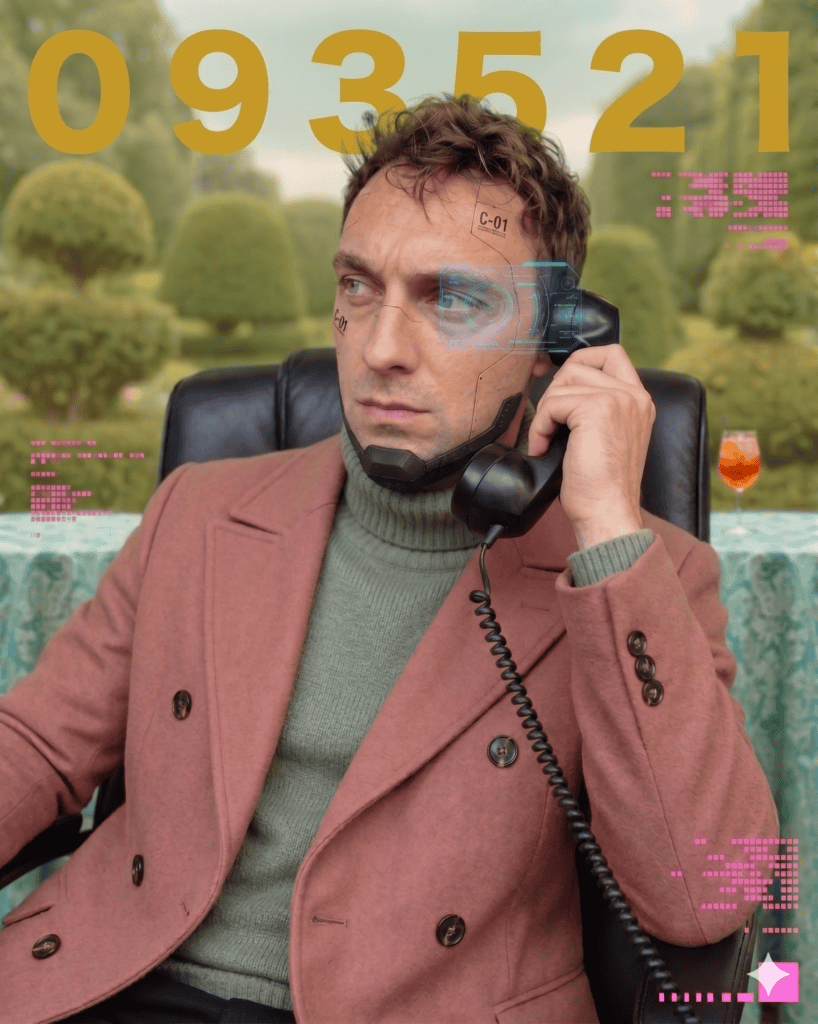
Would You Like To Sign Up For Our Rewards Program?
Book a call With Zach! He is super friendly and only bites if provoked.
we compiled these handy pros and cons of getting to know Zach...
PROS
CONS
We’re basically experts at getting vacation plans out of the group chat.
Our Tourism & Hospitality Campaign Revenue Last Year

M&P Put In The Tourism Marketing Work Last Year, too.
Time Worked
Social Ads Created
Ad Budget Managed
Web Pages Built
Blogs Posted
Campaigns Launched
Marketing Impact Timeline: Long-Term (6 – 8 Months)
SEO is the long game of marketing, but it can take you from a hidden gem to simply a gem.
The entire hospitality industry starts with research. People pride themselves on finding the best spots, planning every day, and getting the best deals. That research starts with a search, both in Google and through AI, and your business can’t afford to be on the second page.
At M&P, we work to cover all aspects of a solid SEO strategy. From technical optimizations to content writing, our team of analysts and SEO experts works with your brand to ensure maximum search coverage for high-intent keywords.
Let’s make sure when people search for their next adventure, they find you first.
An essential aspect of SEO for tourism and hospitality brands is complete, robust coverage of the Maps listing. Not only is location a major decision factor for people, but it can also serve as your digital front door.
Ensuring reviews are fresh, images (from both brand and guests) are frequently updated, and schema data like hours and pricing are optimized can help you expand your keyword coverage with the Google Maps feature.
In addition, a solid Google My Business (GMB) profile can increase your chances of showing up in the Feature Snippet segment of the search results page. This feature takes up major real estate on the page and increases clicks to your website by over 150%.
Everyone in the hospitality industry is aware of the big aggregation brands. Platforms like Yelp and Expedia often dominate search results when it comes to general keywords like “hotels in [city name]”.
However, our SEO research has frequently found massive opportunities for long tail keywords that highlight specific amenities like “rooftop bar” and “free breakfast.”
By creating pages and content that highlight your brand’s amenities can easily rank highly on the search results page and generate high-intent traffic from users looking for features that your location offers!
With the uptick in AI tools, a common request for these Large Language Models (LLMs) is to build an itinerary for various styles of vacations.
These AI itineraries are inherently trusted by users. That means if your brand is incorporated into their plans, scoped by AI tools, you’re much more likely to be worked into their budget and time.
For brands looking to position themselves as an option within these AI prompts, generating helpful, informative content is the admission ticket. Hospitality brands should not just focus on promoting their own services, but also generate insightful content about their location as a whole.
Marketing Impact Timeline: Long-Term (4 – 8 Months)
If your site looks like it was built in 2005, travellers are going to assume your pillows feel like they’re from 2005.
In the travel and hospitality world, brands have about 0.05 seconds to make an impression. That’s less time than it takes to flash your passport at customs.
If your website is clunky, or even worse, confusing, your potential guests are going to quickly hit that back button to find something more to their style.
At M&P, we treat your tourism website as the ultimate concierge. It answers questions before they’re asked, it shows off your best assets, and it makes booking feel like part of the vacation. At the same time, we don’t just build your website like a brochure; we make it a business tool that helps your brand grow.
We don’t particularly like this comparison, but it is fitting; a good tourism website is much like a good online dating profile.
Placing emphasis on high-quality imagery that highlights the best features of your location can separate you from the competition. Adding video backgrounds can infuse personality. Your website isn’t just selling a location, it’s selling a feeling that sticks with potential customers long after they leave the site.
Another benefit of refined hospitality web design is providing the user opportunities to easily share pages, information, and pictures. Travel is rarely alone, and getting a group of people excited to visit your destination is much more potent than a single visitor.
If your website doesn’t get users from web visit to confirmed booking in three clicks or less, your booking is too clunky.
Travel is rarely an impulse buy, but people will associate ease of booking on your website with the quality of service of your destination. A clunky, glitchy booking system is enough to turn potential travellers away – especially since they can leave the website with 1 click.
Additionally, never built a “set it and forget it” booking flow. Marketers should ensure that tracking tools like Google Analytics are implemented throughout the booking process to identify opportunities for consolidating and optimizing the flow.
High-resolution imagery is a double-edged sword for hospitality websites. Yes, these photos are key for grabbing interest and standing out from the competition, but the file size is very large.
These large image files significantly slow down your website loading time – a key element of user engagement and SEO. Especially for mobile users, who are the most common users for tourism, their mobile data can’t handle loading the images. Any site that takes too long to load is easily dropped for another that pops up.
To balance beautiful imagery with site speed, M&P utilizes two features. Image compression tools, like ShortPixel, are able to compress image files while retaining quality. As well as “lazy load” features that will load pages as the users scroll, rather than the entire page at once.
Marketing Impact Timeline: Short-Term (2 – 4 Months)
The high-heat sear marketing services that fill your marketing gaps in a flash.
If SEO is the long, scenic road trip, PPC is the private jet. It’s fast, targeted, and designed to get you exactly where you want to go: the top of the search results and social feeds.
The difference between running a PPC campaign and throwing money at Meta and Google lies in the strategic targeting that paid campaigns allow marketers to utilize.
Barrels of search data, audience data, and engagement data can be leveraged to build a PPC campaign that spends money more like a poker game and less like a donation to the tech giants.
PPC isn’t just an expense; it’s a faucet. When you need more bookings, you turn it up. When you’re full, you dial it back. We’ll handle the keywords, the bidding wars, and the analytics. You just worry about making sure there are enough mints on the pillows.
This question is a HOTLY contested debate in the paid search industry. Some marketers say no, your brand name should be covered by SEO efforts. Other marketers are completely wrong and say you should bid on your brand name.
We’ve heard virtually every excuse from PPC agencies on why they bid on a client’s brand name. Competition, brand defence, and taking up more real estate on the search pages are just a few. It’s stupid. It’s short-sighted. And most importantly, it wastes your marketing dollars.
Here’s why you shouldn’t do it: These ill-informed marketers are overlooking the core aspect of keyword strategy, intent. If a potential customer searches for your brand name, they know what they’re looking for. They won’t be distracted by competitors or aggregators showing up in the Sponsored Results. Your marketing work is done, so why spend more money just to get them to your site a final time?
Why dumb PPC agencies recommend it: It’s self-serving. Branded keywords are consistently the most engaged, highest-converting keywords on your website. PPC agencies that are looking to prove ROI for only paid search campaigns will bid on these keywords to improve their paid search revenue.
Instead, tourism and hospitality brands should measure revenue from the entirety of Google as a measurement of success. Creating a holistic search strategy is a much better way to leverage organic efforts and paid campaign spend.
One of the best ways we’ve leveraged PPC campaigns for tourism partners is utilizing paid marketing budget as the tip of the spear for finding users in their “exploration” phase.
They picked their destination, maybe even bought their flight, and now they’re looking for the best options to fill their time.
Targeting users through informational keywords and social activity can send users to your website while they’re in this vacation planning phase. From there, M&P can utilize these PPC channels to retarget users with specific information, and even possibly exclusive deals.
The difference between artful retargeting and bland retargeting lies in the segmentation of users based on web activity.
Did they only visit the homepage and leave? Send them general information ads. Did they look at specific amenities? Send them lifestyle ads featuring that amenity. Did they start the booking process and drop out? Send them exclusive promo codes ONLY available to them.
Peak season, shoulder season, and off-season require different strategies when it comes to PPC campaigns. Each requires different messaging. Whether it’s “book now” or “learn more” depends on the demand for that point of the year.
Peak Season Strategy: Demand is high. Visitors are far more likely to initiate a search for “things to do.” Ensure your hospitality campaign is emphasizing search budget for this season.
Shoulder-Season Strategy: Prep work for future vacations are in high swing. This works two ways – people planning their upcoming vacation and people basking in the glow of a recent trip.
This season is where the PPC budget should be split between social and search. Social campaigns prompting people for reviews and feedback (to prep for next year’s peak season) and search targeting long-tail, informative keywords to get upcoming visitors into a retargeting funnel.
Off-Season Strategy: Some hospitality brands opt for completely turning off their PPC campaigns during this time, which is definitely a viable option. However, at M&P, we’ve gained insights that emphasizing a paid social campaign during this time is a great way to set the foundation for shaping travellers’ decisions when it comes time to book a trip!
Marketing Impact Timeline: Long-Term (6 – 8 Months)
Because nobody ever booked a trip based on a bulleted list of amenities.
We all know travel is so much more than luggage and tickets. Every vacation is an adventure. A feeling. An unforgettable memory. Content marketing for tourism brands opens the opportunity to not just sell an experience, but tell a complete story for potential customers.
At M&P, we move people from curious to customers by aligning web content with the feelings associated with a visit to your destination.
They book because of the photo of sunset cocktails. They book because they read a guide to the city’s best-kept secrets. They book because they believe that your brand can guide them to the best vacation of their life. M&P crafts content that provides these feelings, not just filler content made for robots.
Our most potent content marketing strategy for tourism and hospitality partners has been spearheading a fundamental shift in how they utilize their website.
Yes, the pages that drive the highest bookings are going to be your homepage, your rooms pages, and your amenity pages. However, by changing the intention of your blog section from PR releases and company updates to insightful content about your city, you can turn your website into a local behemoth.
Writing blogs about “What To Do In [City] When It Rains” or “How To Spend 3 Days In [City]” has two major benefits.
First, and most obvious, is building trust and authority as a tourism expert in your local area. Potential customers will understand that you know your city inside and out. Especially if you promote other tourism options outside of your own, it creates a sense of trust that you want their vacation to be great, not just line your pockets with their travel money.
Secondly, these informational blogs have a ripple effect of increasing backlinks to your website. As travel bloggers and other websites write travel content, they will start to link to your informative page.
This is a baseline of good SEO, and it works two ways. Their travel content gets the thumbs up from Google due to external links, and your website increases SEO domain authority due to the number of backlinks pointing to your domain. Increasing your domain authority not only helps your linked page rank higher, but also helps your converting pages rank higher in search for more competitive keywords.
By implementing “vacation planning” style blog content, a tourism and hospitality website can capture people who are still in the informational stage of their vacation planning.
Garnering traffic from users at this stage of their buying journey creates a terrific audience to target on social and search via retargeting campaigns.
Especially if your brand relies on tourists purchasing while in your location, this blog traffic can be utilized to target users who researched early and are now in your area. This strategy has proved to be a highly successful strategy for M&P’s tourism partners.
Marketing Impact Timeline: Short-Term (3 – 6 Months)
Social media is the world’s biggest cocktail party. You don’t want to be the brand in the corner talking about “competitive rates.”
If your hospitality brand is just posting content and hoping for views and likes, you’re already losing the social media battle.
Social media marketing has shifted from shameless self-promotion to building communities that will share, engage, and follow content and amplify your visibility in the extremely noisy social feeds.
Videos on Instagram, TikTok, and Facebook are frequently used by potential visitors as a quality check for vacation plans. They want to maximize their visit, and social media can be a potent tool that excites people about the potential of visiting your destination.
With M&P, we work with your tourism brand to identify key customers and craft engaging content that speaks directly to their vacation wants and needs.
More and more, travellers are utilizing social media platforms as a key search channel to explore vacation options.
Ensuring your social posts have optimized captions that use key search terms and images contain alt text that can be leveraged by social and search algorithms is often overlooked, but it plays a vital role in extending the lifespan of your social content.
Additionally, search engines are incorporating social posts into their results pages, and AI tools are frequently referencing social media channels like Reddit to influence their results. Understanding the expanding impact of social media can minimize time “coming up with posts” and maximize every post’s marketing impact for your brand.
There is a major difference between User-Generated Content (UGC) and influencer marketing.
Tourism brands should absolutely leverage authentic content from visitors. This can be achieved through reposting, sharing, and engaging on posts that reference your destination. The strategy leverages the idea of “social proof,” which is a powerful tool when building trust with potential visitors.
As for social media influencers, avoid them like the bad part of town. Their audience is typically much younger, who have limited income to spend on tourism. Additionally, they’ve built an audience that only likes and comments on their post, but does not take any action based on their recommendations. Save your marketing dollars on converting campaigns, not impressions and tagged posts.

Maui Ocean Center, rated one of the best aquariums in the world, partnered with M&P to grow its organic search revenue.
But how did we increase revenue when Maui Ocean Center’s main competition is free beaches and lush, tropical forests?
See how M&P implemented a robust SEO and content strategy that leveraged the natural beauty of Maui to create a far-reaching campaign that drove organic search revenue.
We hate to give vague answers, but it truly depends on your needs. Every hospitality partner gets a customized marketing plan, and M&P is an à la carte agency, meaning you don’t have to take everything we propose.
But if you NEED an answer, the typical monthly cost for marketing tourism and hospitality ranges between $3,000 – $8,000 a month.
No, but we love you all the same. We’ve made the conscious decision not to niche down our marketing services to one industry.
For us, this keeps things interesting. For you, it gives you insights from marketing campaigns beyond your industry. We can optimize bookings based on e-commerce data. Enhance social based on beauty brands. All the while, reducing the risk of “templated” campaigns from other agencies.
M&P has the ability to track granular details of AI impact. First, utilizing our marketing tools, we’re able to track any website’s AI mentions and AI citations.
AI mentions are when answers specifically mention your brand. AI citations are when answers leverage your content within their own answer. Both are trackable and provide an easy way to measure AI growth through any campaign.
Every M&P marketing campaign starts with our data team doing their whole nerd thing and ensuring every website visitor, social follower, or ad clicker is tracked throughout their booking journey.
That way, you get insights into which marketing channels are working for your hospitality brand. We work with you to measure the complete sales funnel, providing exact ROI for every marketing channel.
Yes! While our bread and butter is the digital side of marketing, we have experience producing commercials, buying media space, building and placing billboards, and much more!
Every campaign we build is personalized to your marketing needs. If you need us to design t-shirts, we’ll do that! We’re an extension of your team, and no challenge is too big or small!
Don't Want To Read? You Can Listen!
Zach & Kaitlin Discussed Travel & Tourism Marketing In Our Agency Podcast, Manipulating The Masses

You're Really Gonna Leave Us On Read?
That’s cool. It’s not like we spent hours writing content, establishing trust, and running analysis to make this page helpful for you.